My involvement with the ISCB Student Council is largely the result of a series of well-organised events by RSG Belgium that I attended earlier in my career in 2017 and 2018. Many of these were chaired by people from my lab, including Pieter Meysman and Bart Cuypers. I initially joined the web team of the ISCB Student Council and, at the time, never became deeply involved in RSG Belgium itself.
Over the years, however, RSG Belgium (https://rsg-belgium.org/) became dormant. This absence was clearly felt, especially by early-career researchers in bioinformatics and computational biology in Belgium, who missed having a national, community-driven platform for networking and scientific exchange.
I was therefore genuinely happy when Anis Ismail and Saptarshi Chakrabarti (KULeuven) contacted me with the idea of organising a hackathon, inspired by the activities RSG Belgium used to run. We quickly realised this was an excellent opportunity not only to organise a single event, but also to formally revive RSG Belgium. We applied for funding, secured it, and moved into planning mode. A special shoutout goes to Anis, who did an outstanding job driving the organisation forward, as well as to the rest of the organising team: Saptarshi, Nassim Versbraegen, and Eline Turcksin. Working with such a motivated group of people was a real pleasure.
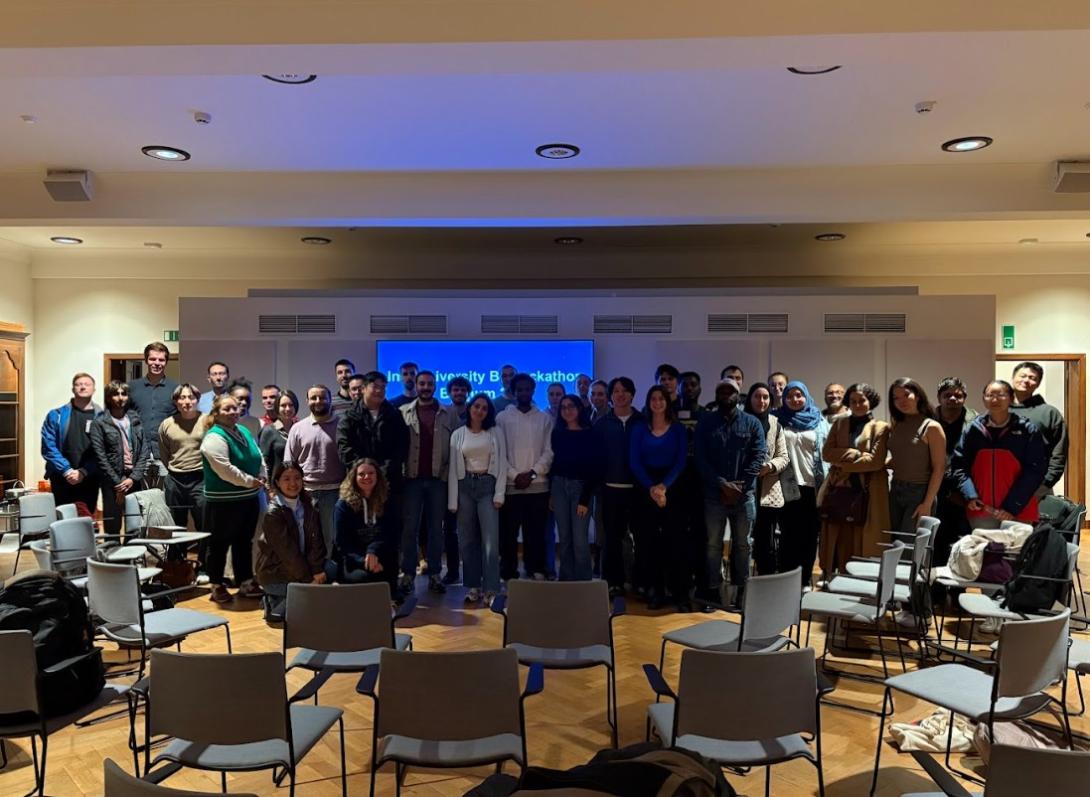
The result was the Interuniversity Biohackathon Belgium 2025, held on 25–26 September 2025 at KU Leuven. This first edition attracted 41 participants, including MSc and PhD students, postdoctoral researchers, and early-career professionals from institutions across Belgium. Beyond being a successful standalone event, the hackathon marked a strategic milestone in the relaunch of RSG Belgium as an active national community under the ISCB Student Council.
The hackathon focused on real-world challenges at the intersection of artificial intelligence and bioinformatics. Participants worked in one of three thematic tracks: Data Exploration and Classical Bioinformatics, Machine Learning for Prediction, and Tool Development and Integration. The event opened with keynote lectures from academic and industry experts, including Panagiotis Mandros, Aziz Fouché, and Bernardo P. de Almeida. These talks set the stage for two days of intensive collaboration, hacking, and problem solving.
The second day was dedicated to continued development, mentoring, and final project preparation, followed by track-specific presentations. Projects were evaluated by expert juries based on scientific rigor, innovation, technical execution, and clarity of presentation. Jury members included Pieter Meysman, Wout Bittremieux, Tom Lenaerts, and Sofia Papadimitriou. The event concluded with an award ceremony recognising the winning teams.
From my perspective, the hackathon was a clear success. It demonstrated that there is still strong interest among young researchers in Belgium for in-person, community-driven events in bioinformatics and computational biology. Most importantly, it showed that RSG Belgium still has a valuable role to play. I am particularly happy that Anis and the broader team are committed to continuing this momentum and nurturing the next generation of computational biologists in Belgium.
You can read more about the event on the RSG Belgium website and LinkedIn page.